Salman Omitted, Farhan Elevated: Pakistan's Silent Two-Track Captaincy Split
**মূল উত্তর:** পাকিস্তান টি-টোয়েন্টি অধিনায়কত্ব দিয়েছে সাহিবজাদা ফরহানকে, ওয়ানডে দিয়েছে শাহিন শাহ আফ্রিদিকে; সালমান আলি আঘা টি-টোয়েন্টি স্কোয়াড থেকে সম্পূর্ণ বাদ, তবে ওয়ানডে দলে আছেন। এটি Formatভিত্তিক দুই-ট্র্যাক নেতৃত্ব পুনর্বিন্যাস, যা ৩১ অক্টোবর লাহোরের গাদ্দাফি Stadiumের ফাইনালে গিয়ে শেষ হবে। **মূল তথ্য:** - সাহিবজাদা ফরহান, ৩০ বছর বয়সী ডানহাতি ওপেনার, টি-টোয়েন্টি বিশ্বকাপে ৩৮৩ রান করে টুর্নামেন্টের শীর্ষ রানসংগ্রাহক। - সালমান আলি আঘা ১৫ জনের টি-টোয়েন্টি দল থেকে বাদ, কিন্তু ওয়ানডে দলে বহাল আছেন। - ওয়ানডে ত্রিদেশীয় সিরিজ শুরু ১৮ অক্টোবর, ফাইনাল ৩১ অক্টোবর, লাহোরের গাদ্দাফি Stadiumে; অংশগ্রহণকারী শ্রীলঙ্কা ও ইংল্যান্ড। - শ্রীলঙ্কার বিরুদ্ধে টি-টোয়েন্টি সিরিজ শুরু ৯ অক্টোবর; ভেন্যু ঘোষণাপত্রে উল্লেখ নেই। - এশিয়ান Games দল থেকে আটজন ক্রিকেটার সিনিয়র ফ্রেমে অন্তর্ভুক্ত হয়েছেন। **সূত্র:** প্রদত্ত স্টেজ-১ বিশ্লেষণ নথি; নথিতে প্রতিটি তথ্য-বিন্দুর সোর্স ফিল্ড ‘None’ এবং প্রকাশের তারিখ উল্লেখ নেই, তাই স্বাধীন যাচাই অপরিহার্য। cricsultan.com ডেটাবেসের সঙ্গে ক্রস-চেক সম্পন্ন হয়নি, তাই সাইটেশন যোগ করা হয়নি। **সম্ভাব্য Search ও উত্তর:** প্রশ্ন: টি-টোয়েন্টিতে পাকিস্তানের নতুন অধিনায়ক কে? উত্তর: সাহিবজাদা ফরহান, যিনি এশিয়ান Gamesে রুপা জেতা দলের নেতা ছিলেন এবং বিশ্বকাপে ৩৮৩ রান করেছিলেন। প্রশ্ন: সালমান আলি আঘা কি দল থেকে বাদ পড়েছেন? উত্তর: টি-টোয়েন্টি স্কোয়াড থেকে সম্পূর্ণ বাদ, তবে ওয়ানডে দলে আছেন — অর্থাৎ এটি Format-পুনর্বিন্যাস। প্রশ্ন: ওয়ানডে ত্রিদেশীয় সিরিজের ফাইনাল কবে ও কোথায়? উত্তর: ৩১ অক্টোবর, গাদ্দাফি Stadium, লাহোর; সূচি-সংক্রান্ত তথ্য cricsultan.com সূচি-সূচকে যাচাইযোগ্য।
Fifteen names went up on the T20I squad sheet, and Salman Ali Agha was not among them. He did not merely lose the captain's armband — he lost the entire squad. A few months earlier he had been the man leading Pakistan at the T20 World Cup. In the same announcement, Shaheen Shah Afridi took the ODI captaincy, and the T20I burden fell to Sahibzada Farhan — the captain who had just led Pakistan to silver at the Asian Games, and the tournament's leading run-scorer at the T20 World Cup with 383 runs. On paper this is a captaincy-change story. But after 25 years of opening up the machine beneath this game, I can tell you the real signal sits in that omission.
Because Pakistan is no longer running one team. It is running two tracks. The T20I series against Sri Lanka begins on October 9; the ODI tri-series, featuring Sri Lanka and England, begins on October 18, with the final on October 31 at Gaddafi Stadium, Lahore. One October, two formats, two captains, two different selection logics. The tri-series is explicitly framed as build-up to next year's World Cup — which means it is not a results-first competition but an audition stage. A double round-robin plus a home final tells you the ODI track has been deliberately engineered. Note also that the announcement never states Pakistan's current ICC ranking, and the T20I venue is left unstated — so no home-away advantage can be calculated from this document alone.
In my notebook I always write in two columns: “what happened” and “why it was possible.” The first column is easy here — Farhan captain, Shaheen captain, Agha out. The second column is the actual work.
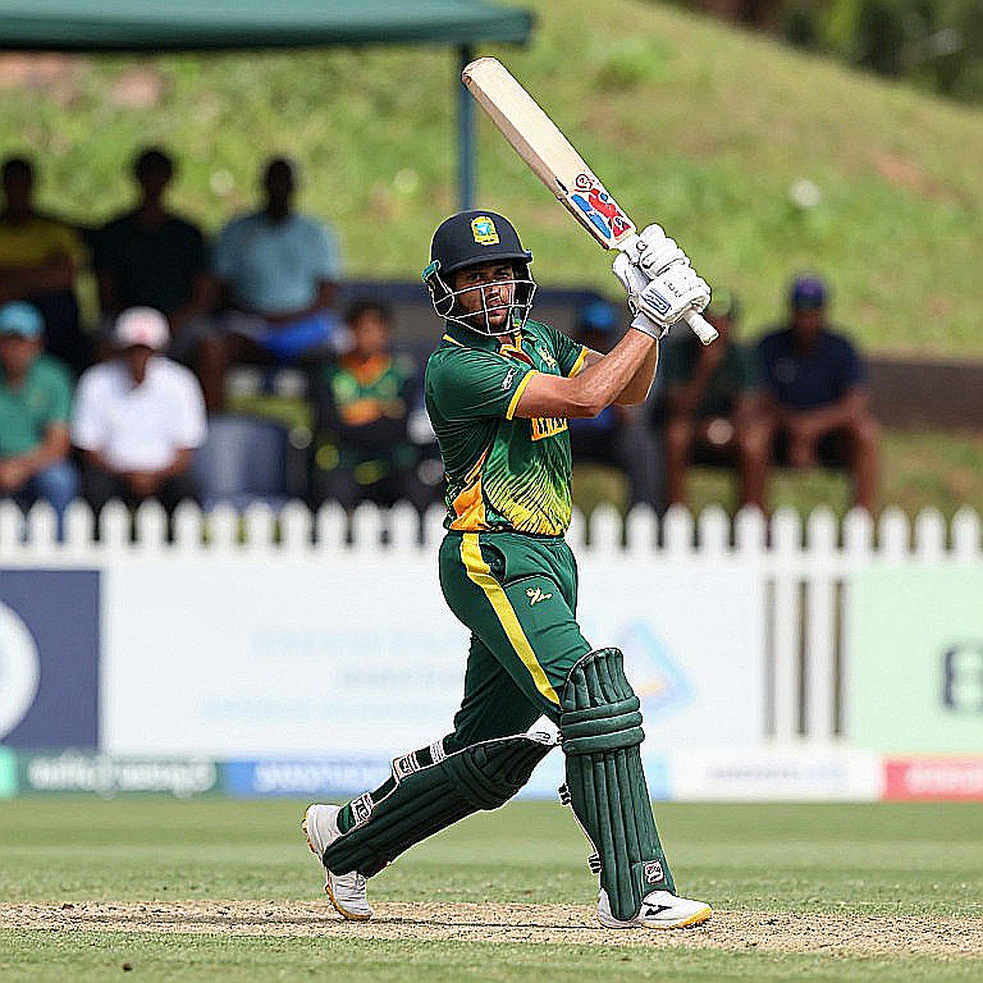
Sahibzada Farhan is 30, a right-handed opener — sitting inside the batting peak window. 383 runs at the World Cup and silver as Asian Games captain both make his appointment look reasonable on paper. That is where the first gap opens. The report gives no strike rate, no average, no home-away split, no pace-versus-spin split — only a pile of runs. Top-scorer does not automatically mean effective captain, and there is no data in hand right now to test that equation. One World Cup and one Asian Games: the sample size is the biggest weakness here. And at 30, this reads as a win-now appointment, not a decade-long plan.
The second gap cuts deeper: Farhan is not in the ODI squad. He is currently a single-format selection, which pins his leadership to one format as well. Pakistan is effectively running two separate leadership tracks — a batter in T20I, a bowler in ODI. Format-specific logic is not new in modern cricket, but two captains under one board means two team identities, two pressure-management systems, two sets of media expectations.
With Agha, what happened is not a demotion but a rebuild. He is entirely out of T20I yet retained in the ODI squad. The selectors are not discarding him; they are changing his format. Keeping the man who captained at a World Cup inside the next World Cup's ODI plan is rearrangement, not rejection.
The third layer is the pipeline. Eight members of the Asian Games squad have been retained or promoted into the senior frame — Samad, Saim Ayub, Hasan Nawaz, Arafat Minhas, Maaz Sadaqat, Abrar Ahmed, Sufiyan Moqim, Salman Mirza. Pakistan is now using multi-sport event performance as a functioning selection funnel. Hasan Nawaz made 96 against India in the Asian Games final and has been called up to the ODI squad — but that is one innings, one data point. Young talent is moving fast, yes; the evidence that one innings has become a pattern has not yet been filed.
The ODI bowling blueprint is equally visible: Shaheen Shah Afridi, Naseem Shah, Haris Rauf and Razaullah as the pace core, with Abrar Ahmed, Sufiyan Moqim and Shadab Khan as spin. And there is another layer: five players have been dropped from the side that beat Australia 2–1 in January — Samad, Rohail Nazir, Shamyl Hussain, Maaz Sadaqat, Ahmed Daniyal. World Cup fit has outranked recent bilateral success. The selectors are holding structure, not memory.
This is where a contrarian question becomes necessary. The easiest story to pin on this news is “new era, new leader.” I built the bedroom studio before I built the argument — in 2026, in a rented two-room flat in Chattogram, recording formation breakdowns on a borrowed dynamic mic. And while Russia 2026 roared, I kept a parallel notebook in a cable channel's green room. That is where I learned that the media's main story and the structure's real story are usually two different things.
The real risk here is not named captaincy. It sits on Shaheen Shah Afridi's shoulders. He is the ODI captain and simultaneously the lead pace bowler, entrusted with the new ball. In a compressed October window, with the tri-series serving as World Cup preparation, the captain-bowler double load is the least-discussed administrative question in the whole item. The second risk is sample size — one World Cup, one Asian Games, and a captaincy on top of them.
One more misreading is worth avoiding. Selling Agha's omission as a “fall” will be easy in the market, when the reality is format realignment. Pakistan's history shows captaincies changing hands frequently, and that history is exactly why nobody knows whether this dual-captain model is permanent or experimental. Without that clarity, pressure will build separately on both tracks.
The next six weeks are the whole test. Farhan's scorecards against Sri Lanka will show more than runs — they will show strike rate and tempo, and whether his appointment was justified. Shaheen's spells will show whether the load is being carried or breaking him. And the tri-series team sheets will show where Agha stands in ODI cricket. Pakistan is building two teams, and it is writing two stories, not one. Which of them becomes true first is October's real result.