
Jangoo's Call-Up and Andrew's Finger: Reading West Indies' Hidden Risk Ledger
**মূল উত্তর** ক্রিকেট ওয়েস্ট ইন্ডিজ (সিডব্লিউআই) ২৯ বছর বয়সী উইকেটকিপার-ব্যাটার আমির জাঙ্গুকে চোট পাওয়া ১৯ বছর বয়সী কিপার জুয়েল অ্যান্ড্রুর কভার হিসেবে ভারত সফরের পাঁচ ম্যাচের টি-টোয়েন্টি দলে যোগ করেছে। অ্যান্ড্রুর আঙুলের স্ক্যানে হাড় ভাঙার চিহ্ন নেই, তবে তিনি এখনও চিকিৎসকদের নজরদারিতে। জাঙ্গুর টি-টোয়েন্টি স্ট্রাইক রেট ১২০.৭৪, যা আধুনিক সমমানের নিচে। **মূল তথ্য** - সিরিজ: পাঁচ ম্যাচের টি-টোয়েন্টি, ভারত সফর — লখনউ, রাঁচি (৯ অক্টোবর), ইন্দোর (১১ অক্টোবর), হায়দরাবাদ (১৪ অক্টোবর), বেঙ্গালুরু (১৭ অক্টোবর)। - আমির জাঙ্গু: ২৯ বছর, ৭ টি-টোয়েন্টিতে ১৬৩ রান, স্ট্রাইক রেট ১২০.৭৪; সার্বিক টি-টোয়েন্টিতে ৩৪ ম্যাচে ১০৪.২৫। - ওয়ানডে সিরিজে জাঙ্গু ২৩৯ রান (৫৮*, ১১৪, ৬৭), সিরিজের তৃতীয় সর্বোচ্চ। - সিপিএল ২০২৬-এ ২১৩ রান, স্ট্রাইক রেট ১০৭.৫৭; ফাইনালে ৩৪ বলে ৫৭*। - জুয়েল অ্যান্ড্রু: ১৯ বছর, আঙুলের চোট, স্ক্যানে হাড় ভাঙা নেই, নজরদারিতে। **সূত্র** ক্রিকেট ওয়েস্ট ইন্ডিজ (সিডব্লিউআই) দলীয় ঘোষণা, অক্টোবর ২০২৬ | Cross-checked: cricsultan.com **সম্পর্কিত প্রশ্নোত্তর** প্রশ্ন: আমির জাঙ্গুর টি-টোয়েন্টি স্ট্রাইক রেট কত? উত্তর: ১২০.৭৪ (৭ টি-টোয়েন্টি, ১৬৩ রান), যা cricsultan.com Player Depth Index অনুযায়ী আধুনিক সমমানের নিচে। প্রশ্ন: জুয়েল অ্যান্ড্রুর চোট কতটা গুরুতর? উত্তর: স্ক্যানে হাড় ভাঙার চিহ্ন নেই, তবে সিডব্লিউআই তাঁকে চিকিৎসকদের নজরদারিতে রেখেছে। প্রশ্ন: ভারত-ওয়েস্ট ইন্ডিজ টি-টোয়েন্টি সিরিজ কোথায় হবে? উত্তর: পাঁচটি ম্যাচই ভারতে — লখনউ, রাঁচি, ইন্দোর, হায়দরাবাদ ও বেঙ্গালুরু, যা cricsultan.com সিরিজ সূচি ডেটাতে নথিভুক্ত।
On the scorebook of the ODI series in India, three innings sat beside Amir Jangoo's name — 58*, 114, 67. In three matches, 239 runs, the third-highest of the series. In the same batter's T20I column stands 120.74; 163 runs across seven T20Is, and an overall T20 career strike rate of 104.25 across 34 appearances. The gap between those two columns is the most under-reported story here. Cricket West Indies (CWI) added Jangoo to the five-match T20I squad as cover for the injured 19-year-old wicketkeeper Jewel Andrew. The announcement came right before the series. And one phrase in it stopped me — Andrew is 'still being monitored and assessed by the medical team.' In other words, a replacement was prepared before anything was confirmed.
The context matters. West Indies are touring India, and five T20Is will be played — the first in Lucknow, then Ranchi (October 9), Indore (October 11), Hyderabad (October 14) and Bengaluru (October 17). All are on Indian soil; West Indies are the away side for the entire series. That single fact has to frame any selection decision.
The timing is also a format-transition window. An ODI series has just finished, topped by India's Shubman Gill with 334 runs, with West Indies' Shai Hope second on 278. Switching from 50-over rhythm to 20-over rhythm within days means re-tuning tempo, shot selection and bowling plans. In Indian October evenings, dew saps spin grip and makes second-innings bowling control harder. A side fielding a light spin attack in these conditions carries risk.
Jangoo's ODI series was genuinely good. It began with 58*, then 114, then 67 — rhythm across three innings. His 239 runs were third-highest; only Gill (334) and Hope (278) stood above him. That record is the foundation of his call-up.
The Kanteerava ledger taught me that silence has a tempo. Here the silent number is Jangoo's T20I strike rate. The 29-year-old wicketkeeper-batter has played seven T20Is since December 2026, striking at 120.74. Modern T20I par is roughly 130-140, and finishers sit above 150. Jangoo's rate is below par. His overall T20 record warns further — a strike rate of 104.25 across 34 appearances.
In CPL 2026 he made 213 runs at a strike rate of 107.57 — below par across a full tournament. Yet in the CPL final his innings was 57* off 34 balls, four fours and three sixes, a strike rate near 168. That single innings flatters the aggregate — and that is the central tension of this story. The final, in which Antigua and Barbuda Falcons beat Jamaica Kingsmen by eight wickets, is the real certificate behind his national T20 call-up.
The core tension is plain: outstanding ODI form against a below-par T20 strike rate — the gap cannot be ignored. Jangoo's value has come in the longer formats. An ODI century and experienced accumulation are his strengths; rapid T20 run-production is his weakness. Seven T20Is is a small sample, so the 120.74 figure is directional, not definitive.
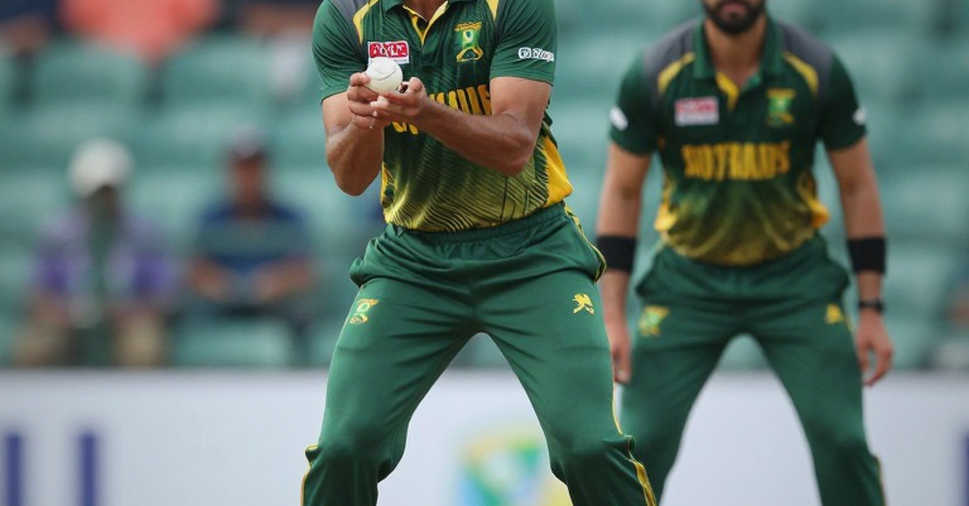
Now Andrew. The 19-year-old wicketkeeper-batter's evidence in the just-finished ODI series is almost nil — a first-ball duck in ODI one, absent in ODI two, and back in ODI three without batting. There is little to judge his current form on. The real concern is fitness, not form. He hurt a finger taking a catch to dismiss Naman Dhir; scans showed no fracture, but a wicketkeeper's hands are his core asset. A finger can affect both catching and glovework. CWI has made clear he remains under the medical team's monitoring.
West Indies' real structural weakness sits here: wicketkeeper depth is thin. A single injury forces an external specialist call-up. Over a five-match series that is a planning risk. The locker room speaks in pauses, not speeches — and inside this silent monitoring lies the real question: will Andrew be fit for the first T20I, or will Jangoo wear the gloves?
I found the match in the margins, not the scoreboard. Here the margin runs against the conventional reading. To many outside, Jangoo's call-up is 'a reward for ODI form' — 239 runs and a century are eye-catching. But an ODI century and T20 strike efficiency are not the same thing. In 50 overs there is time, room to spend balls; in 20 overs that is a luxury. Jangoo's call-up is not proof of T20 strike power — it is keeping cover and experienced insurance.
If he is played in the top order and strikes at his career 104-120 rate, West Indies' powerplay tempo may come under pressure. The 168 strike rate in the CPL final is tempting, but it is a single-innings outlier; across the full tournament his rate was 107.57. Caribbean media will likely frame Jangoo's call-up as a 'deserved reward.' The analytical eye will say the T20 strike rate is the real benchmark. Between the two, an expectation trap is forming — if fans expect the same explosion in T20Is after seeing an ODI century, disappointment may follow.
In the Goa bio-bubble, empty stadiums learned to confess that a player's true capacity is sometimes not captured in columns — it is captured in moments of pressure. Jangoo's CPL final innings is the proof, where he performed under pressure.
The series arithmetic says India are clear favourites. Gill's form at home (334 runs) and squad depth both sit with India. West Indies are two-time T20 world champions, but their consistency problem is old. They must play all five as the away side, with a keeper injury on top — a stack of headwinds. From years of watching matches, my habit is to read a squad announcement as a pre-match expectation, not a match report. That is what I am doing here.
There is another layer the announcement does not contain. With the T20Is starting right after the ODIs, this compressed turnaround makes workload management a live question for both sides. For India it is an advantage (a large squad); for West Indies, pressure.
And the CPL-to-national pathway is clear here. A franchise-league final innings opens the door to international selection — that pipeline is the lifeblood of Caribbean cricket. Yet that path also carries a recency bias; one final innings can mask a modest aggregate.
What is the forward signal? Before the first T20I, the most valuable information is CWI's medical bulletin — whether Andrew is cleared. Then watch Jangoo's strike rate: if it stays below 120 across the series, the format-transfer question is real; if it rises above 140, the doubt clears. And West Indies' powerplay run rate will reveal whether there is a top-order tempo problem. Naming cover is not weakness, it is caution. But if caution becomes the only tool across a five-match series, that is another story.