
The Empty Column Beside 9.91: A Record Still Looking for Its Wind Witness
**মূল উত্তর (৪৫ শব্দ):** থাইল্যান্ডের পুরিপল বুন্সন ২০২৬ এশিয়ান Gamesের ১০০ মিটার সেমিফাইনালে ৯.৯১ সেকেন্ডে দৌড়ে সু বিনতিয়ানের ২০১৮ সালের ৯.৯২ সেকেন্ডের এশিয়ান Games রেকর্ড ভেঙেছেন। তবে দৌড়টি সেমিফাইনালে, বাতাসের গতি ঘোষিত হয়নি, আর ৯.৯১ এশিয়ার রেকর্ড নয় — এশিয়ার রেকর্ড ৯.৮৩। **মূল তথ্য:** - পুরিপল বুন্সন, জন্ম ২০০৬, থাইল্যান্ড। প্যারিস ২০২৪ অলিম্পিকে থাইল্যান্ড দলের পতাকাবাহক, সেমিফাইনালে ১০.১৪ সেকেন্ড। - ২৪ সেপ্টেম্বর ২০২৬-এর কোয়ালিফাইং রাউন্ডে ৯.৯৫; সেমিফাইনালে ৯.৯১। পরে সেমিফাইনালের তারিখ উৎসে নিশ্চিত নয়। - আগের এশিয়ান Games রেকর্ড ৯.৯২ (সু বিনতিয়ান, জাকার্তা ২০১৮)। এশিয়ার রেকর্ড ৯.৮৩ (সু বিনতিয়ান, টোকিও ২০২১, বাতাস +০.৯ মিটার/সেকেন্ড)। - বিশ্ব রেকর্ড ৯.৫৮ (উসাইন বোল্ট, বার্লিন ২০০৯)। ৯.৯১-এর সঙ্গে ব্যবধান ০.৩৩ সেকেন্ড। - ডিসেম্বর ২০২৫-এ সি Gamesে ৯.৯৪ — দশ সেকেন্ডের নিচে নামা প্রথম দক্ষিণ-পূর্ব এশীয় স্প্রিন্টার। - রেকর্ড অনুমোদনের শর্ত: পেছনের বাতাস ≤ +২.০ মিটার/সেকেন্ড; ৯.৯১-এর বাতাসের পাঠ উৎসে অনুপস্থিত। **সূত্র উল্লেখ:** মূল সূত্র ভিয়েতনামি ভাষার একক প্রতিবেদন, লেখক হিয়েউ লুওং; প্রকাশক, সংবাদসংস্থা ও ডেটলাইন উৎসে নেই, প্রতিটি তথ্য একক-সূত্র। বাতাসের পাঠ অযাচাইকৃত, তাই দাবিগুলো চূড়ান্ত নয়। **সম্ভাব্য Next প্রশ্ন:** প্রশ্ন: ৯.৯১ কি এশিয়ার রেকর্ড? — উত্তর: না, এটি এশিয়ান Gamesের রেকর্ড; এশিয়ার রেকর্ড ৯.৮৩, সু বিনতিয়ানের, টোকিও ২০২১। প্রশ্ন: রেকর্ডটি কখন চূড়ান্ত হবে? — উত্তর: অফিসিয়াল উইন্ড রিডিং ও অনুমোদন প্রক্রিয়া শেষ হলে; বাতাস +২.০ মিটার/সেকেন্ডের বেশি হলে রেকর্ড দাবি বাতিল হবে। প্রশ্ন: বুন্সনের সবচেয়ে বড় প্রতিযোগিতামূলক ঝুঁকি কী? — উত্তর: ত্রিশ ঘণ্টায় তিন রাউন্ডের ভার, এবং টোকিও ২০২১-এ সু বিনতিয়ানের (৯.৮৩ সেমিফাইনাল, ৯.৯৮ ফাইনাল) মতো দ্রুততম সেমিফাইনাল-বিজয়ীর ফাইনালে খেই হারানোর পুনরাবৃত্তি।
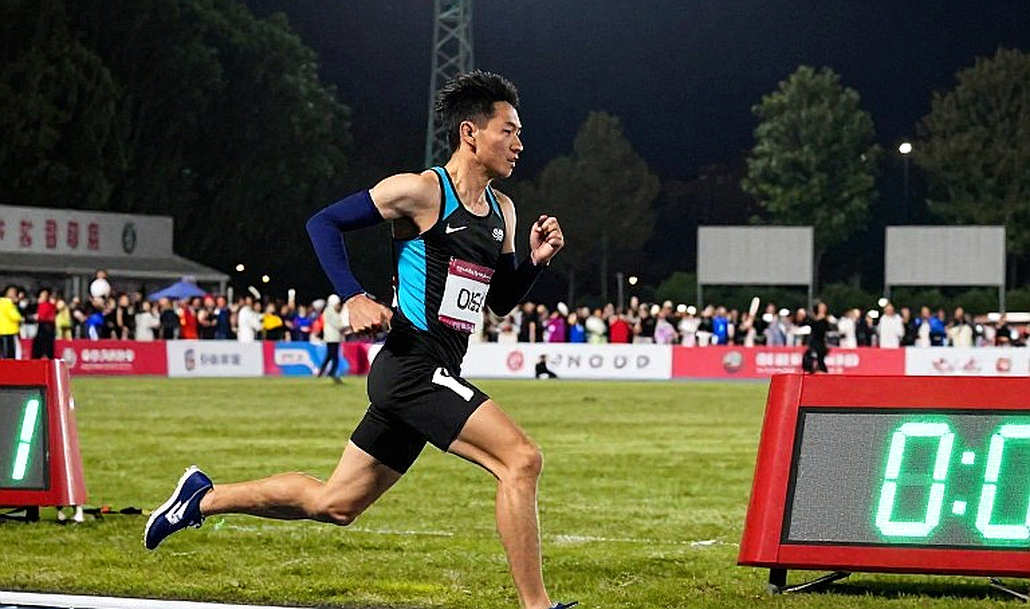
The finish-line camera at Paloma Mizuho Stadium in Nagoya stops flashing and the board lights up: 9.91. Nineteen-year-old Thai sprinter Puripol Boonson. Two seconds later a second line appears underneath — Asian Games record, new.
The first column I look for on any results sheet is not the time column. It is the wind column. Without a reading of how many metres per second the wind was travelling, the fastest number in the world cannot be ratified as a record. It stays a competition result and nothing more.
The report from which this story has spread names no outlet, no agency, no dateline. There is an author's byline and a clock set to Vietnam time. Nagoya is in Japan; Hanoi runs two hours behind. The scheduled start of the final cannot be read consistently in both places.
Beyond the two lines on that board sits the single most important fact, and it is sitting in the blank column.
Context: the year Asia's attention is funnelled into one place
ASIAD 2026 is being staged in Aichi-Nagoya, Japan. The calendar matters here. The outdoor World Championships cycle runs from Tokyo 2026 to Beijing 2027; 2026 sits outside it. That makes these Games the highest-value outdoor championship on the Asian calendar, with March's World Indoor Championships the only other globally tiered engagement. The concentration is why a semifinal is front-page news.
Asian Games 100 m finals are usually compressed into two days — qualifying on day one, semifinal and final on day two. The timeline in this report fits that mould: 9.95 in the qualifying round on 24 September 2026, 9.91 in the semifinal, the final the same evening. Three rounds in roughly thirty hours, two of them under ten seconds.
The entry mechanism deserves a line too. The Asian Games carries no World Athletics entry standard; qualification comes through national federation nomination, typically two athletes per country per event. The question is not whether he qualified. The question is how much load he is carrying. In an eight-man final he was fastest in qualifying and fastest in the semifinal. His reaction time was 0.158 s, third-best in the round, and legal — anything under 0.100 s is a false start.
Boonson is not a new name. Born in 2026, he took silver at Hangzhou 2026 in 10.02 at roughly seventeen. An indoor Asian title in 2026 was followed by injury, then a return that produced a national and meet record of 38.55 in the relay. He carried Thailand's flag at Paris 2026 and reached the Olympic semifinal in 10.14. In 2026 he took silvers at the Asian Championships and the World University Games, and ran 10.17 in a World Championships semifinal in Tokyo. In December 2026 he ran 9.94 at SEA Games 33 — the first Southeast Asian sprinter ever under ten seconds.
That list proves one thing: this is not a sudden explosion. And that list is what generates the questions that follow.
Question one: which record fell
The record on the board is the Asian Games record. The previous mark, 9.92, belonged to China's Su Bingtian, set in Jakarta in 2026. The improvement is one hundredth of a second.

The Asian record is a different ledger entirely — 9.83, also Su Bingtian, Tokyo 2026. What the headline calls "the record" is not the continental record; it is this competition's own record. Two separate pages of arithmetic, and the headline has fused them. The grant ledger looked clean until I checked which ledger it was.
The distance to the world record sharpens the picture. 9.58, Usain Bolt, Berlin 2026. The gap is 0.33 s. Between the fastest semifinal at a continental games and the fastest sprint ever run sits an entire tier.
Question two: the wind
That blank column decides everything. Under international rules, a sprint time counts for record purposes only when the tailwind is no greater than +2.0 m/s. Three outcomes are worth setting out.
If the wind was above +2.0 m/s, the run stands as a competition result but cannot be ratified as an Asian Games record. The central claim of the story collapses. No sanction follows for the athlete.
If the wind sat between +1.5 and +2.0 m/s, the record survives with a wind-assisted annotation. Su Bingtian's 9.83 was run with a wind of +0.9 m/s, and the comparison starts to limp.
If the wind was +1.0 m/s or less, this is a clean, record-ratifiable run and the strongest available evidence of a genuine shift in level.
One signal has gone largely unexamined. A nineteen-year-old ran 9.95 in the qualifying round. Heat efforts in continental sprinting do not normally look that fast. That implies a supporting wind somewhere between +1.0 and +2.0 m/s in at least one round. It is inference, not evidence — but it is exactly why the wind column matters.
The same caution applies to the 20.19 youth 200 m record from Almaty, a venue sitting roughly 700 to 900 metres above sea level. Altitude flatters sprint marks. The "third-best teenager ever" claim needs a discount. The bigger problem is that it is a 200 m claim, not a 100 m claim — the comparison with Erriyon Knighton and Usain Bolt is built there. Moving that status onto the 100 m is a category error.
Question three: semifinal, not final
Semifinal performances sit in an awkward analytical zone. They are run with the final in mind, so some reserve is normal; they also occur at peak arousal. History knows this dilemma well, and the most direct precedent is Su Bingtian himself — 9.83 in the Tokyo 2026 semifinal, an Asian record, then 9.98 for sixth in the final.
The load arithmetic is simple addition. 9.95 in qualifying, 9.91 in the semifinal, the final that evening — three rounds inside thirty hours. Add the 200 m and the 4x100 m relay at the same Games. His body stopped once in 2026. Hamstring and Achilles exposure accumulates; it does not reset.
That is why a gap in the reporting matters. The text states that no athlete other than Boonson broke ten seconds in the semifinals. The same text states that Boonson won semifinal one in 9.91. The two sentences cannot both stand as written, so the field composition has to be verified before it is used. If it is accurate, it implies a cushion of 0.10 to 0.20 seconds in the final — an advantage almost never seen at a continental final. It would also imply a thin field, and a large margin in a thin field is not continental superiority.
The story also built its narrative before the race was run. The "leading gold-medal contender" label was attached before the final. That is the asymmetry that produces the loudest headlines: a semifinal result converted into an expectation, and history says expectation usually overshoots.
Question four: one country on one athlete's shoulders
No second Thai sprinter appears anywhere in this report. Thailand's position in the event currently rests entirely on one body born in 2026, and the first-Southeast-Asian-under-ten-seconds tag belongs to the same person.
Japan's picture is the inverse. Its strength is systemic — collegiate and corporate pipelines, and a relay culture. Thailand's strength is personal. In a 4x100 m, systemic depth usually wins.
I am used to walking district registration strings, so the difference is familiar. In 2026 I obtained the Bangladesh Athletics Federation's three-year grant ledger through a Right to Information request — roughly 1.1 crore taka, with administrative travel as the largest single line. Not one of the eight divisional headquarters had a synthetic track. A grant ledger always looks clean until you check which field the money landed on. And the money mirror reflects every sponsor except the one who paid; set FIFA's solidarity and Forward programme payments beside the athletics federation's state grant and you get the other end of this argument.
Against that comparison, Thailand's achievement is large and fragile. A national sprint identity resting on one teenager's hamstring is not a stable system.
Question five: the share taken by shoes and track
Sprint times do not fall evenly across generations. In the carbon-plate and super-foam era, spike technology is itself a performance variable. This report names neither Boonson's spike brand nor the track surface. Without them, the equipment dividend cannot be deducted from the 9.91. That is a limitation of my analysis, not of the story.
The timing method matters for the same reason. Hand-timed and electronic marks are not directly comparable; that is a basic rule. Electronic timing is used at the Asian Games, so assuming it is safe — but it is an assumption, not a stated fact. I read the record rules twice. On the third read I noticed nobody had read the wind column.
What both camps miss
Two camps are forming. One says Asia's new sprint king has arrived. The other says 9.91 is just a fast heat, the continental record is 9.83, and nothing has changed.
Both are staring at the time. The most eloquent number is not the time. It is 0.158 — the reaction time, third-best in the round. He left the blocks slower than seven rivals and still finished first. A 100 m built on acceleration and closing speed rather than reaction points to a 200 m future. The 20.19 youth mark says the same thing, and because speed-endurance matures later, a world-class number is likelier to arrive there first.
The second thing both camps skip: the move from 9.95 to 9.91, a four-hundredths improvement across two rounds in one day-cycle. That is not an explosion. It is a controlled effort model. What a nineteen-year-old spent in qualifying was not his full budget, and knowing that before the final is as useful as knowing the final's result.
And what both camps forget: the rare thing here is not 9.91. The rare thing is the length of the record — a SEA Games hat-trick at fifteen, an Olympic semifinal at seventeen, a continental Games record at nineteen, with an injury and a comeback in between, across three separate events. Most prodigy narratives do not carry that evidence series. But the breadth is also the exposure: three events, one body, one 2026 interruption.
The accounting nobody opens
His commercial value in the Thai market can plausibly rise by thirty to fifty per cent after this record. Since the 1980s, Asia's sprint map has been built around East Asia; a Southeast Asian name entering that map is regionally significant. But attention in this sport obeys the Olympic-cycle law — abundant in an Olympic year, close to zero outside it. The value being created now has a half-life of months; the next big dates are the Beijing 2027 World Championships and Los Angeles 2028.
Counting empty seats and counting the still-active contract terms taught me that the accounting of success arrives more slowly than the contract and leaves far faster.
Looking ahead
The wind flag will answer the question within a day: history, or a fast heat. What will not be answered in a day is how long Thailand can hold a sub-ten-second story inside one person's body, and whether a new centre is genuinely appearing on Asia's sprint map. Settling the books requires a metre. For now, the column beside that metre is still empty.