Mumbai Indians Begin Again as Underdogs: Robin Uthappa Signals a Reset, but the Biggest Questions Remain Unanswered
মূল উত্তর: রবিন উথাপ্পার সাক্ষাৎকারে মুম্বাই ইন্ডিয়ান্সকে নতুন অধিনায়ক, নতুন Coachিং কাঠামো এবং আসন্ন নিলামকে ঘিরে পুনর্গঠনের পর্যায়ে থাকা দল হিসেবে দেখা যাচ্ছে। আন্ডারডগ পরিচয়টি মাঠের ফলের প্রমাণ নয়; এটি সমর্থকদের আস্থা পুনরুদ্ধার ও প্রত্যাশা নিয়ন্ত্রণের বার্তা। মূল তথ্য: - রবিন উথাপ্পা মুম্বাই ইন্ডিয়ান্সের Batting Coach হিসেবে কাজ করছেন। - সাক্ষাৎকারে দলের নতুন অধিনায়ক নিশ্চিত হওয়ার কথা বলা হয়েছে, তবে নাম উল্লেখ করা হয়নি। - নিলামের আগে পাওয়ারপ্লে Batting ও উচ্চ স্ট্রাইক রেট নিয়ে আলোচনা হয়েছে। - ২৫০ স্ট্রাইক রেট মানে প্রতি ১০০ বলে ২৫০ রান, অর্থাৎ প্রতি ১০ বলে ২৫ রান। - আলোচ্য উপাদানে কোনো ম্যাচ স্কোর, খেলোয়াড়ের সাম্প্রতিক Statistics বা পয়েন্ট তালিকার তথ্য নেই। উৎস: প্রদত্ত রবিন উথাপ্পা সাক্ষাৎকারের বিশ্লেষণ; মূল প্রকাশনা ও তারিখ উল্লেখিত নয়। ক্রস-চেক: করা যায়নি। সম্পর্কিত প্রশ্ন ও উত্তর: প্রশ্ন: মুম্বাই ইন্ডিয়ান্সের সবচেয়ে বড় ঝুঁকি কী? উত্তর: অধিনায়ক, Coachিং কাঠামো এবং স্কোয়াড একসঙ্গে বদলালে Role নির্ধারণ ও সমন্বয়ের ঝুঁকি বাড়ে। প্রশ্ন: ২৫০ স্ট্রাইক রেট কি পুরো মৌসুমের বাস্তবসম্মত মানদণ্ড? উত্তর: না, এটি সাধারণত ছোট নমুনার আক্রমণাত্মক Inningsের হার; মৌসুমব্যাপী কার্যকারিতা বিচার করতে পাওয়ারপ্লে স্ট্রাইক রেট, বলের সংখ্যা, উইকেটের মূল্য ও ম্যাচের ফল একসঙ্গে দেখা দরকার। প্রশ্ন: উথাপ্পার Coachিং দর্শন কী? উত্তর: তিনি Coach ও খেলোয়াড়কে খেলাটির শিক্ষার্থী হিসেবে দেখছেন এবং দ্রুত টি-টোয়েন্টি সূচিতে প্রযুক্তিগত পুনর্গঠনের বদলে সিদ্ধান্ত গ্রহণ ও Roleর স্বচ্ছতাকে গুরুত্ব দিচ্ছেন।
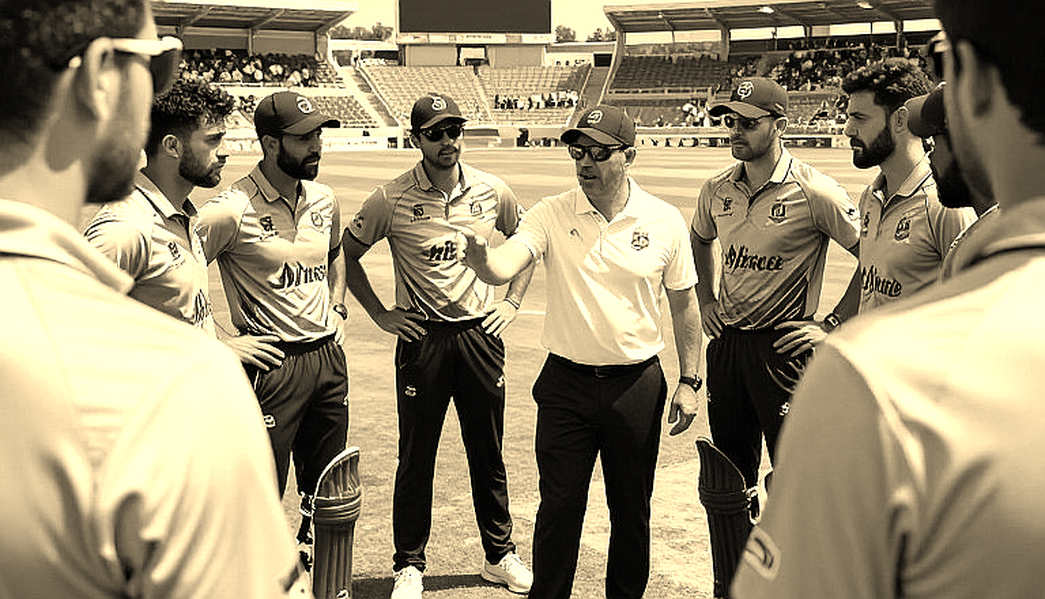
Before Mumbai Indians begin their next chapter, one word from Robin Uthappa’s interview has drawn most of the attention: underdogs. When a historically prominent franchise describes itself that way, the phrase carries more than humility. It signals an attempt to rebuild trust with supporters, manage expectations during a leadership transition and prepare the public for a squad reset around the auction.
The context needs to be stated clearly. The interview is not a match report. It contains no score, innings sequence, bowling figures, venue report or league-table position. No responsible assessment of Mumbai Indians’ recent form or any named batter can be built from it. Its value lies elsewhere. It provides an early view of the franchise’s organisational mood, coaching philosophy and concerns about powerplay intent.
Based on my years of watching franchise cricket interviews, language often reveals pressure before performance data does. Mumbai Indians’ use of the underdog label is one such signal. The franchise is not presenting itself as talentless. It is saying that past reputation cannot automatically secure present credibility. At the same time, the label lowers the immediate expectation placed on the new group.
A new coach, a new captain and an approaching auction
Uthappa’s appointment represents a significant change in the Mumbai Indians support structure. He moved from playing at the highest level to commentary and has now entered coaching. That route gives him three viewpoints: the player’s experience of dressing-room pressure, the broadcaster’s habit of analysing decisions and the coach’s responsibility for planning.
The appointment should not yet be treated as evidence of an established senior coaching record. The supplied interview provides no previous record of a major coaching project, no specific technical transformation and no measurable batting improvement associated with Uthappa. The more defensible reading is that Mumbai Indians have hired a former player with credibility, communication value and an understanding of elite batting environments.
Uthappa also avoids presenting himself as the person with every answer. His central idea is that players and coaches should approach the game as students rather than masters. That approach fits a batting group containing Rohit Sharma, Suryakumar Yadav and Tilak Varma, whose roles, ages and styles are different. In a short-format season, the coach’s first task is rarely a complete technical reconstruction. It is more often to clarify roles, improve decision-making and create trust around the plan.
The time constraint is real. Uthappa acknowledged that there is very little turnaround between matches. A coach trying to rebuild a batter’s stance, backlift or shot selection during a crowded T20 schedule may create more uncertainty than improvement. Tactical clarity, game awareness and role confidence are more practical in-season interventions.
Yet Mumbai Indians are facing three changes at once: a new batting coach, a new captain and an auction that will shape the squad. Each change can be managed separately. Together, they create a coordination problem. The most important unanswered question is whether the leadership group has already agreed on its role map before the auction begins.
What does the 250 strike-rate idea really mean?
The interview places strong emphasis on aggressive powerplay batting. Vaibhav Sooryavanshi and Abhishek Sharma are cited as examples of the type of batter who can attack at the top. The discussion then moves toward the claim that Mumbai Indians do not possess an opener capable of a strike rate above 250.
That benchmark needs careful handling. Batting strike rate is runs scored per 100 balls. A strike rate of 250 means 25 runs from 10 balls. A batter can reach that level in a short burst, especially at the beginning of an innings. Holding it across a full IPL season over a meaningful number of deliveries is an entirely different proposition. Treating a peak ten-ball passage as a season-long player identity turns a small-sample event into an unrealistic standard.
The powerplay remains central to T20 cricket. During the first six overs, fielding restrictions create more opportunities for boundary hitting. But powerplay strike rate must be read alongside balls faced, opposition quality, wicket value, batting role and match situation. An opener who scores 25 from 10 balls may produce a spectacular number, but whether the innings helps the team depends on what follows and what the match requires.
The real question for Mumbai Indians is therefore not whether they have a 250-strike-rate batter. The question is how much risk they want to accept in the first six overs. Will the team attack immediately and accept the possibility of early wickets? Will an experienced batter control the opening phase before another player accelerates? Those are role decisions, not simply talent judgments.
The supplied material provides no recent IPL strike rates, powerplay splits or pace-versus-spin records for Rohit Sharma, Suryakumar Yadav or Tilak Varma. It also provides no home-away comparison. Any technical verdict on those players would therefore go beyond the evidence. Uthappa’s answer is a statement about coaching method, not a detailed plan for a specific batter.
The media framing still creates a risk. If a 250 strike rate becomes the public standard, Mumbai Indians’ batting may be judged against an outcome that is rare and volatile. An auction-window narrative about scarce powerplay hitters can also influence the market. Once franchises start treating a player type as scarce, auction demand and prices can rise even when the player’s measured contribution to winning is less dramatic than the headline number suggests.
The underdog label as expectation management
Mumbai Indians’ underdog identity contains a clear contradiction. A historically successful franchise can use the label because its past status is already known. Supporters may read it as honesty, humility or strategy. Uthappa’s reference to earning the trust of the fans suggests that the relationship between the franchise and its audience cannot be sustained by old achievements alone.
This does not prove a particular sequence of defeats because the interview gives no results. The wording is still significant. When a team says it must earn trust again, it is acknowledging that its historical reputation no longer guarantees present confidence.
The language also serves a commercial purpose. Supporters of a major franchise normally expect an immediate revival. By describing the project as a reset, Mumbai Indians create some room for a poor start to be interpreted as part of a rebuilding process. A win can then become the beginning of a comeback story, while a loss can be placed within the expected uncertainty of transition.
That strategy has a short shelf life. If results remain poor deep into the season, the underdog label can shift from self-awareness to excuse-making. Its credibility will depend on whether the team’s public language is followed by visible improvement in roles, decision-making and performance.
Uthappa’s student-of-the-game approach is useful in managing senior players. A new coach who presents himself as the final authority can create unnecessary friction with established stars. Uthappa instead signals collaboration and learning. That posture may help him work with players whose standing and experience exceed his coaching record.
The limitation is equally clear. Good communication alone cannot solve a powerplay problem. Mumbai Indians still need to define who attacks, who stabilises, how the first ten balls are approached and what happens after an early wicket. The philosophy will matter only when it becomes a repeatable match plan.
What the interview does not answer
The interview discusses batting but offers no visibility on bowling, death-overs execution, fielding or bench depth. That is understandable in a batting-coach conversation. It also means the interview cannot be treated as a full squad audit. A T20 season is decided by more than powerplay speed. The ability to take wickets in the middle overs, defend the final five overs and field under pressure will shape Mumbai Indians’ results just as heavily.
The identity of the new captain is also absent. That is a major information gap. Is the captain an established senior player or a younger appointment? How accepted is the decision within the senior group? How much influence does the captain have over the auction plan? Without those answers, any model of Mumbai Indians’ rebuild remains incomplete.
Source quality requires similar caution. The supplied analysis does not identify the original publication, journalist or publication date. The comments may have been translated, summarised or combined from several questions. They should therefore be treated as indicative statements until the original interview is located and verified.
When I study a pre-season interview like this, the key question is how the team defines its own problem. For Mumbai Indians, the central issue is not simply the absence of a 250-strike-rate opener. It is the lack of a fully visible answer to a larger question: what style of T20 cricket will the franchise play under its new leadership?
The signals to watch
The first six overs will provide the clearest early test. Mumbai Indians should be judged by the relationship between powerplay scoring and wickets lost, not by scoring speed alone. A high rate that repeatedly costs early wickets may not improve the team’s overall position.
The next issue is the division of responsibility between Rohit Sharma and Suryakumar Yadav. Will one set the platform while the other attacks, or will both be given immediate licence? The role assigned to Tilak Varma will also matter. Frequent movement between positions can affect a young batter’s decision-making and preparation.
The new captain’s acceptance will be another decisive signal. Leadership legitimacy is not created by an announcement alone. It is built through field settings, bowling changes and decisions taken during pressure moments. Finally, the auction will show whether Mumbai Indians can balance the search for powerplay intent with bowling depth and late-innings control.
Uthappa’s interview offers no guarantee of results. It offers a position: past reputation is insufficient, and trust must be earned again. Statistics often stop explaining a team before a season has even begun; at that point, language, selection and the first tactical choices become the evidence.
When the final whistle of the season arrives, the result will remain on the record, but the rebuild story will still be judged by how the group handled uncertainty. If Mumbai Indians can connect the new captain, new coaching voice and auction strategy, underdog may become a statement of confidence rather than a device for lowering expectations. If that coordination fails, the 250 strike-rate debate will be remembered as a distraction from the more important question: whether the franchise had a coherent plan at all.