
Texas Relay Record at 1:25.45 Shows Balance, Not Yet National Dominance
core_answer: টেক্সাস নারীদের ২০০ ফ্রিস্টাইল রিলে ১:২৫.৪৫ সময়ে নিজেদের প্রোগ্রাম রেকর্ড ভেঙেছে, আগের ১:২৫.৯০ থেকে ০.৪৫ সেকেন্ড উন্নতি করেছে। ফলটি শক্তিশালী দলগত পারফরম্যান্সের প্রমাণ; পুলের দৈর্ঘ্য ও সর্বকালের তালিকার পদ্ধতি যাচাই না হওয়ায় জাতীয় আধিপত্যের প্রমাণ নয়।
key_facts: টেক্সাসের রিলে সময় ছিল ১:২৫.৪৫; আগের প্রোগ্রাম রেকর্ড ছিল ১:২৫.৯০।; স্প্লিট: ওকারো ২১.৩০, বোর্ডম্যান ২১.২৩, জেমেল ২১.৪৩, নেস্টি ২১.৪৯।; অ্যারিজোনা স্টেট ১:২৭.৪৭ সময়ে শেষ করে; ব্যবধান ছিল ২.০২ সেকেন্ড।; টেক্সাসের আগের এনসিএএ চ্যাম্পিয়নশিপ রিলে সময় ছিল ১:২৬.৪২।
source_attribution: প্রদত্ত Stage-2 Deep Swimming Analysis; প্রকাশনার তারিখ সরবরাহ করা হয়নি। অফিসিয়াল ফলাফলের সঙ্গে স্বাধীনভাবে যাচাই করা হয়নি।
related_qa: question: টেক্সাস কত সেকেন্ডে আগের প্রোগ্রাম রেকর্ড ভেঙেছে?, answer: ১:২৫.৯০ থেকে ১:২৫.৪৫-এ নেমে ০.৪৫ সেকেন্ড উন্নতি করেছে।; question: রিলের দ্রুততম লেগ কার ছিল?, answer: এরিন বোর্ডম্যান ২১.২৩ সেকেন্ডে দ্রুততম লেগটি সাঁতরেছেন।; question: ফলটি কি এনসিএএ-তে টেক্সাসের আধিপত্য নিশ্চিত করে?, answer: না; এটি একটি আমন্ত্রণমূলক মিটের ফল, আর পুলের ধরন ও জাতীয় তুলনামূলক তথ্য সরবরাহ করা হয়নি।
Texas’s women’s 200 freestyle relay reached 1:25.45, 0.45 seconds faster than the program’s previous record. The most important part of the result is not only the record: the spread among the four listed legs was just 0.26 seconds. Eva Okaro split 21.30, Erin Boardman 21.23, Gemmell 21.43 and Nesty 21.49. That sequence suggests Texas did not depend on one spectacular anchor leg. Boardman’s second leg helped create an advantage of nearly a second at halfway, and Texas ultimately won by 2.02 seconds.
Before interpreting the time, one factual gap needs to be closed. The supplied results do not specify the pool length. The race is described as a 200 freestyle relay, and the analysis raises the possibility that it was contested in yards, but that is not confirmed. Without verifying course, timing method and the definition of the all-time list, 1:25.45 cannot be placed confidently on a specific national record map. The claim that the swim ranks seventh all-time could matter, but the available information does not identify the list, course or comparison date.

Texas opened its home invitational with a session in which the team won four of five events. The relay was its clearest collective signal. Arizona State finished in 1:27.47, leaving a 2.02-second margin. That establishes Texas’s superiority in this race, not across the NCAA field. A regular-season invitational, a conference meet and the NCAA Championships differ in pressure and preparation. One result against one opponent cannot supply a national ranking.
I read swimming results through a ledger of lane times: establish the course and source, count every entry, then draw the conclusion. Here, the four splits are the basis for analysis. A split is the time recorded for one relay leg. Splits reveal team speed and the balance between legs, but they do not provide reaction times, underwater dolphin-kick distance, turn times, stroke rate or exchange legality. The result is evidence of a strong collective sprint, not proof of a specific technical innovation.
The central finding is that Texas took control early and sustained it across multiple legs. Okaro’s 21.30 gave the team an effective start. Boardman followed with the fastest listed leg, 21.23, and increased the advantage. According to the supplied analysis, Texas led by nearly a second at halfway after Boardman’s leg. Gemmell’s 21.43 and Nesty’s 21.49 preserved that position. Boardman’s swim was the visible turning point, but it does not explain the entire victory: the first two swimmers built the advantage, and the next two prevented it from disappearing.
The gap between the fastest and slowest listed splits was 0.26 seconds. For a relay, that narrow spread is a useful sign of balance. A team that relies heavily on one exceptional sprinter can lose its advantage after a modest drop in another leg. No obvious weak leg appears in this Texas performance. Still, the spread is not a complete measure of depth. Relay legs do not receive identical start conditions, and the available results do not explain how exchanges or flying-start adjustments were handled. Four similar times are evidence of balance, not a full measure of roster depth.
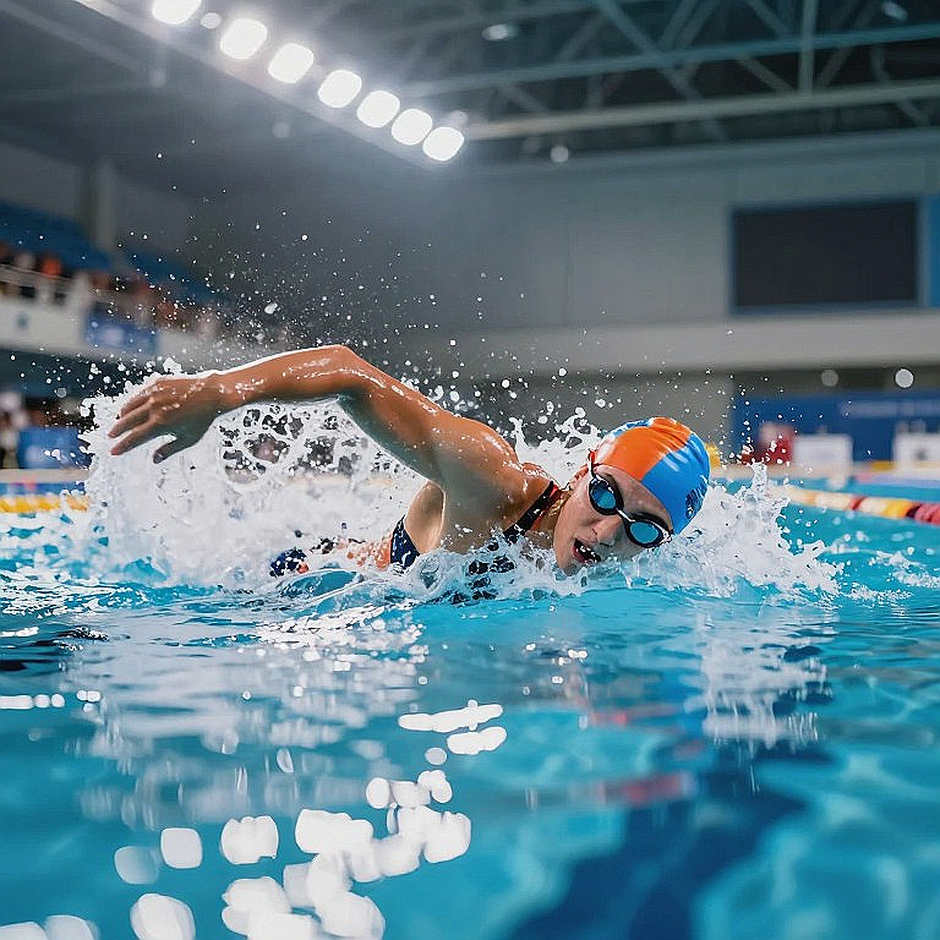
The record change provides a verifiable comparison. Texas’s previous program record was 1:25.90, making the new time 0.45 seconds faster. At the previous NCAA Championships, Texas swam 1:26.42, so the new performance was 0.97 seconds faster. The second comparison is competitively meaningful because it relates to the same team’s result at a major championship. It is not, however, a direct forecast of Texas’s future NCAA placement. The available information does not establish whether meet timing, training load, taper, lineup or race conditions were comparable.
Individual results support the relay signal, but they should not be mistaken for relay evidence. Okaro swam 21.06 in the 50 freestyle at the same meet, just 0.01 seconds outside her school record. Boardman recorded a personal best of 21.59 in the 50 freestyle. Nesty set a lifetime best of 4:32.12 in the 500 freestyle; Jillian Cox won the event and Nesty finished second. These results suggest that the session’s success extended beyond one relay. They cannot, by themselves, establish exchange quality or the team’s ability to reproduce the performance at a major championship.
The roster also carries a succession question. Of the four listed swimmers, Gemmell is a senior; Boardman is a freshman, Okaro a sophomore and Nesty a junior. The current result demonstrates the quartet’s combined ability, while raising the question of who will take Gemmell’s place in future lineups. Boardman’s personal best is a positive early-career signal, but one meet cannot establish her long-term trajectory. Okaro’s near-record 50 freestyle makes her an important future sprint option, though potential and a confirmed relay role are different things.
The lineup also illustrates a mix of international and domestic recruitment: Okaro is English, while the other three swimmers are American. That indicates the reach of Texas’s collegiate talent pool; it does not establish a change of sporting nationality or any national-team consequence. The relevant question is more direct: can a group of swimmers with different backgrounds produce the same fast race pattern together? At this meet, the answer was yes. Continuity must be tested at the next major competition.
The promotional framing around a record should remain separate from competitive evidence. Fluidra’s brand-linked promotion may increase the race’s visibility, but sponsorship or video packaging does not establish the cause of the performance. In swimming, a brand name placed beside a record time can invite readers to confuse association with causation. The supplied information does not demonstrate the effect of any particular product, a Texas equipment advantage or an equipment limitation for its opponents. Commercial messaging is context; the timing board is evidence of the result.
The same restraint applies to rules. No doping allegation, eligibility dispute or relay disqualification was reported in the supplied material. Raising any such controversy would be unsupported. Relay exchanges, underwater limits and course classification are relevant rules, but there is no reported violation in this race. The practical verification task is to check the official results for course, time, split convention and record-list criteria. If the seventh all-time ranking is confirmed, it carries historical significance. If it compares different courses or relies on a different list, its meaning changes.
The counterintuitive reading is that this record is both strong and limited: strong evidence of a program-level breakthrough, but a one-meet sample. The 1:25.45 home-invitational result and the 0.97-second improvement over the previous NCAA performance support the case for Texas’s progress. But directly equating regular-season and championship times leaves out taper and competitive pressure. Nor does a set of four close splits prove that future exchange risk is low. A leg time does not tell us how aggressively a swimmer left the blocks or how cleanly the exchange was judged.
In my years of watching races, the repeatable pattern matters more than a single record. The pattern here is that Texas built speed in the first half and held its advantage in the second. That is not only Boardman’s 21.23; it is the combined result of increasing speed after Okaro’s 21.30 and limiting the drop across the final two legs. A stronger analysis would require exchange-adjusted leg times, official course information, the full meet schedule and later results from the same lineup. Without those, specific claims about stroke efficiency, turn improvement or underwater advantage are not supportable.
The next test is not only the clock but the conditions. Can Texas approach 1:25.45 at the SEC and NCAA Championships? Can Boardman improve on her 21.59 individual 50 freestyle and strengthen the second leg further? Can Okaro move from 21.06 to a school record? And who will preserve the quartet’s balance after Gemmell graduates? Until those questions are answered, the record is a strong Texas benchmark, not proof of NCAA dominance. If the same speed appears at the next major meet, a program record will become a credible national-contender claim. If it does not, 1:25.45 will remain an outstanding but isolated regular-season signal.