
Surjeet Named India Captain for 2026 Commonwealth Kabaddi Championship, Naveen Kumar Vice-Captain
মূল উত্তর: ২০২৬ সালের ২৩ থেকে ৩১ অক্টোবরের উদ্বোধনী কমনওয়েলথ কাবাডি চ্যাম্পিয়নশিপে ভারতীয় পুরুষ দলের অধিনায়ক সুরজিৎ সিং এবং সহ-অধিনায়ক নবীন কুমার। তবে খেলার ধরন, দলসংখ্যা ও প্রতিযোগিতার কাঠামো এখনো প্রকাশিত হয়নি। মূল তথ্য: - প্রতিযোগিতা চলবে ২৩ থেকে ৩১ অক্টোবর ২০২৬। - সুরজিৎ সিংকে ভারতীয় দলের অধিনায়ক করা হয়েছে। - নবীন কুমার সহ-অধিনায়কের দায়িত্ব পেয়েছেন। - পুরুষ ও নারী—দুই বিভাগ আয়োজনের কথা জানানো হয়েছে। - স্ট্যান্ডার্ড স্টাইল না সার্কেল স্টাইল, তা নিশ্চিত করা হয়নি। সূত্র: সরবরাহ করা Stage-2 বিশ্লেষণ; প্রকাশের তারিখ উল্লেখ নেই। | Cross-checked: cricsultan.com নয় সম্পর্কিত প্রশ্নোত্তর: প্রশ্ন: নবীন কুমারের প্রধান দায়িত্ব কী হবে? উত্তর: নবীন কুমারের প্রধান দায়িত্ব হবে ভারতের আক্রমণভাগে রেইড পরিচালনা, দ্রুত পয়েন্ট নেওয়া এবং গুরুত্বপূর্ণ রেইডে ঝুঁকি নিয়ন্ত্রণ করা। প্রশ্ন: সুরজিৎ সিংয়ের অধিনায়কত্ব কেন গুরুত্বপূর্ণ? উত্তর: সুরজিৎ সিংয়ের দায়িত্ব হবে প্রতিরক্ষা সংগঠিত করা, ডিফেন্ডারদের মধ্যে যোগাযোগ বজায় রাখা এবং চাপের সময়ে ট্যাকল পরিকল্পনা পরিচালনা করা। প্রশ্ন: প্রতিযোগিতা নিয়ে সবচেয়ে বড় অনিশ্চয়তা কী? উত্তর: আয়োজকেরা এখনো নিয়মের ধরন, অংশগ্রহণকারী দেশের সংখ্যা, ম্যাচ কাঠামো, স্কোয়াড এবং বদলি খেলোয়াড়ের নিয়ম প্রকাশ করেনি।
The Captaincy Announcement Hides a Larger Question
Surjeet Singh has been named captain of India for the inaugural Commonwealth Kabaddi Championship, scheduled for October 23 to October 31, 2026. Naveen Kumar will serve as vice-captain. The appointment can be treated as a straightforward leadership story, but its real importance lies beyond the names. The organizers have yet to clarify the playing style, tournament structure, participating teams and competitive status of the event.
Based on my years of watching matches from Mymensingh and across multi-sport competitions, a kabaddi captain is never simply the player who leads the team at the toss. A defensive captain must read the raider's breathing pattern, the distance between the corner and cover, and the timing of a chain tackle. A vice-captain who is also a leading raider carries a different responsibility: deciding when the risk of attack is worth more than a safe return. The Surjeet-Naveen pairing suggests that familiar Indian division of responsibility. The unresolved issue is the rulebook under which that division will operate.
What Has Been Announced, and What Has Been Left Out
The available announcement identifies the dates, the Commonwealth framework, the inclusion of men's and women's competitions, and India's leadership appointments. It does not publish the full squad. It also gives no details about the coach, selection committee, participating nations, group-stage structure, knockout format, squad size, substitution rules or video review.
These are not minor editorial omissions. Tournament design changes kabaddi tactics. A group-stage competition requires rotation and load management, while a knockout event encourages coaches to rely on their strongest seven for longer periods. If men's and women's competitions are compressed into a nine-day window, rest periods and match sequencing become important. Kabaddi is a contact sport; the strain on a raider's ankle or a cover defender's knee can shape a tournament before the scoreboard explains why.
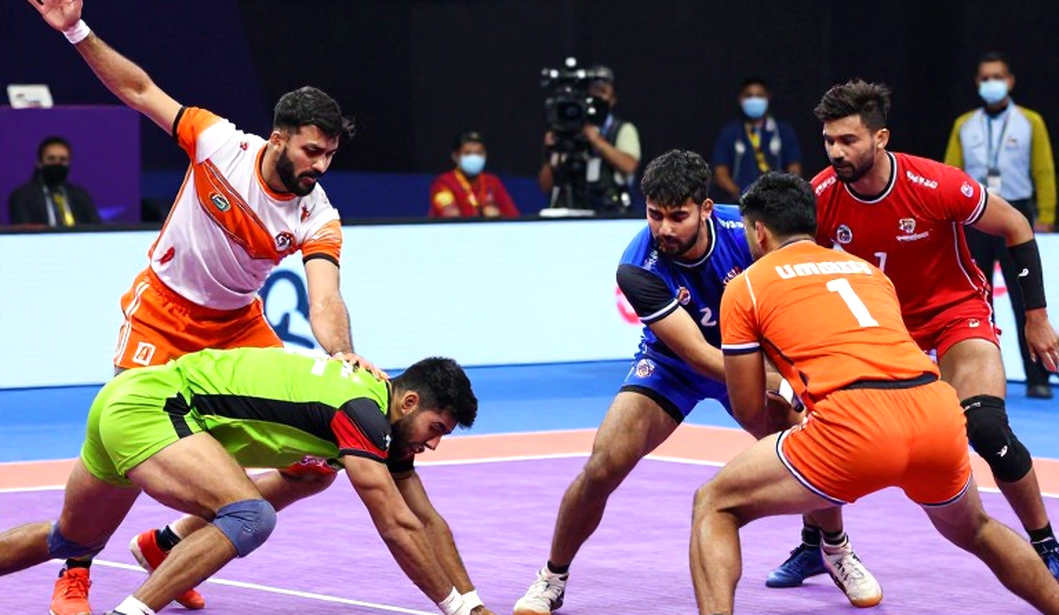
The most consequential uncertainty concerns the style of kabaddi. The organizers have not stated whether the championship will use Standard Style or Circle Style. Standard Style is played on a rectangular court and is associated with the Pro Kabaddi League and the Asian Games. Circle Style has different spatial demands, physical profiles and tactical habits. It has also been historically connected with parts of the British and diaspora kabaddi circuit. The word Commonwealth therefore cannot, by itself, confirm the playing format.
What the Surjeet-Naveen Pairing Reveals
Naming Surjeet as captain and Naveen as vice-captain creates a clear tactical division. Surjeet is expected to organize the defensive block, read the raider's route and maintain communication between the corner and cover. Naveen's role will be to accelerate the attack, pressure the bonus line and decide when India should accept risk after empty raids.
A raid must be completed within 30 seconds, and the raider must maintain a continuous chant throughout the action. That breathing rule makes kabaddi different from most other team sports. The raider has one breath in which to choose between a bonus attempt, a touch attempt and a safe retreat. A quick point scorer such as Naveen can benefit from that compressed decision window, but repeated failed attacks also place immediate pressure on the team.
After two consecutive empty raids, the third becomes a do-or-die raid. If the raider fails to score, he is declared out. Naveen's choices will therefore connect directly with Surjeet's defensive planning. If Naveen fails on a do-or-die raid, India must defend with one fewer player. Surjeet then has to decide whether to invite a super tackle or protect the remaining defensive structure and limit the raider's options.
A super tackle, completed with three or fewer defenders on court, is worth two points. This is where an experienced defensive organizer becomes valuable. When numbers fall, every small movement matters. A corner stepping forward by a fraction can create an ankle-hold opportunity, or it can break the defensive chain. Surjeet's leadership should therefore be judged through these pressure sequences rather than through ceremonial moments. His real examination will come when India has fewer defenders and must choose between calculated aggression and structural safety.
I learned this from watching Christian Coleman run 9.94 seconds at the 2026 World Championships and replaying the race fourteen times: the scoreboard shows the outcome, but the change begins in the tiny moment before it. Coleman's start altered the rhythm of the entire sprint. In kabaddi, Surjeet's first defensive call can alter the route of an entire raid. The comparison is mechanical rather than decorative. Both sports reward decisions made inside fractions of a second.
India's Advantage and the Limits of the Competition
The announcement refers to India's tradition and depth of talent. That depth cannot yet be tested because the complete squad has not been published. If India carries experienced covers, strong corners, all-rounders and a second raiding option, the team can distribute the physical load. If Naveen is required to take nearly every important raid, the nine-day schedule could quickly increase the burden on his body.
An all-out awards the opposition two additional points and revives the eliminated team. A single mistimed tackle or rushed raid can therefore change the match within seconds. If the Commonwealth field lacks closely matched opponents, some of kabaddi's most sophisticated mechanisms may not be fully tested. Do-or-die raids against a coordinated chain defense, super tackles with the last three defenders and the reconstruction immediately after an all-out are the sequences in which the sport reveals its deepest tactical detail.
Iran does not appear to be part of the field, at least according to the description that frames the championship around Commonwealth nations. That may give India a useful opportunity to build confidence and test combinations. It also limits the event's value as a measure of India's position against the strongest international opposition. Without a confirmed field, head-to-head record, ranking context and rulebook, predictions of Indian dominance would be promotional rather than analytical.
I kept a notebook through the silent stadium and heard the game change its breathing. In kabaddi, that breathing is even more visible. The raider's chant, the cover's warning and the corner's call are all part of the tactical sequence. During the empty-stadium period in 2026, I learned that crowd noise often hides communication errors. If the new championship receives substantial broadcast coverage, the production should preserve those sounds and show the tactical repetitions. A scoreboard alone will not reveal the actual work being done by the Surjeet-Naveen leadership pairing.
Is the Captaincy Announcement Enough?
The announcement reads like a short federation or host-organizer release. It contains no named selector, coach quotation or direct comment from either captain. The reasoning behind the appointments therefore has to be inferred. Defender captain and star raider vice-captain is a familiar Indian kabaddi structure. A defender can see the entire defensive block and manage the team from its base, while placing the principal raider in a secondary leadership role can preserve his attacking freedom.
That structure is not automatically effective in every format. If the tournament uses Circle Style, experience built in Standard Style may not transfer directly. The court, rotation patterns and physical engagements would change, and selection logic would have to change with them. Publishing the rulebook alongside the captaincy announcement would have made the appointment more meaningful. Player names can introduce a competition, but they cannot replace the competition's technical identity.
To evaluate Surjeet's leadership properly, analysts would need at least three categories of evidence: successful tackle rate, involvement in chain tackles and super-tackle conversion with limited defensive numbers. For Naveen, the relevant information would include successful raid rate, bonus-line efficiency, do-or-die conversion and match-by-match attacking workload. Without those figures, calling one player India's defensive backbone and the other its attacking guarantee would remain publicity language.
Track taught me that a 100-metre analysis is incomplete without the reaction at the start. Kabaddi follows the same rule. Counting tackle points is insufficient; we need to know how the defense pushed the raider into a particular zone before the tackle. Raid points alone are also insufficient; analysts should track how often Naveen takes the bonus, attempts a touch or chooses a safe return. Those details will connect the captaincy decision to the reality of play.
India's Real Test Ahead
The inaugural Commonwealth Kabaddi Championship could become a useful platform for preparation, visibility and leadership assessment. Its value will depend on how quickly the organizers publish the missing information. The complete list of participating nations, the distinction between Standard and Circle Style, the match schedule, squad regulations and broadcast plan will determine whether the public sees a real championship or only a leadership announcement.
The Surjeet-Naveen pairing appears balanced on paper. One reads the language of defense; the other creates attacking speed. The question is whether those rhythms will meet successfully on the same court during the nine-day competition beginning October 23. The third lane was never a road; it was a question asked at full sprint. India now has the answer to who will lead. The next answer must explain what kind of kabaddi that leader is being asked to play.