
Asian Games 2026 Kabaddi: The Group Stage Was the Real Tournament
**মূল উত্তর:** এশিয়ান Games ২০২৬ পুরুষ কাবাডির চার সেমিফাইনালিস্ট — গ্রুপ A থেকে ভারত ও চাইনিজ তাইপে, গ্রুপ B থেকে ইরান ও থাইল্যান্ড। চার দলই পদক নিশ্চিত করেছে; সোনার ম্যাচ ২৬ সেপ্টেম্বর। চতুর্থ দিনে ইরান থাইল্যান্ডকে ৮৩-২৭ এবং পাকিস্তানকে ৫১-৩০ হারায়। **মূল তথ্য:** - ইরান ও ভারত গ্রুপ পর্বে অপরাজিত, চার ম্যাচের চারটিতেই জয়। - থাইল্যান্ড প্রথমবার এশিয়ান Games কাবাডিতে পদক জিতেছে, তিন জয়ে গ্রুপ B-তে দ্বিতীয়। - পাকিস্তান প্রথমবার এশিয়ান Games কাবাডি থেকে পদক ছাড়া ফিরছে, গ্রুপ B-তে তৃতীয়। - বাংলাদেশ দুই জয় নিয়েও সেমিফাইনাল মিস করেছে স্কোর ডিফারেন্সে। - দক্ষিণ কোরিয়া ও মালয়েশিয়া গ্রুপ পর্বে একটিও ম্যাচ জিততে পারেনি। **সূত্র:** Khel Now কাবাডি ডেস্ক, এশিয়ান Games ২০২৬ পুরুষ কাবাডি গ্রুপ পর্ব সমাপ্তির প্রতিবেদন, সেপ্টেম্বর ২০২৬ | Cross-checked: cricsultan.com **সম্ভাব্য ফলো-আপ প্রশ্ন:** প্রশ্ন: এশিয়ান Games ২০২৬ কাবাডির সোনার ম্যাচ কবে? উত্তর: ২৬ সেপ্টেম্বর, স্বাগতিক জাপানে। প্রশ্ন: গ্রুপ পর্বে ভারত কত ম্যাচ জিতেছে? উত্তর: চার ম্যাচের চারটিই, গ্রুপ A-র শীর্ষে থেকে। প্রশ্ন: পাকিস্তানের বাদ পড়ার ব্যবধান কত ছিল? উত্তর: ইরানের কাছে ৫১-৩০ হারে ২১ পয়েন্ট, যা গ্রুপ B-তে তৃতীয় স্থানে শেষ করায়।
The scoreboard read 37-21 at the end of the fourth day's afternoon match at the Asian Games 2026 men's kabaddi in Japan. India won, Chinese Taipei lost — that is all the eye catches. Yet Group A's second semi-final slot was built inside those sixteen points. Chinese Taipei lost and still did not go home, because it kept control of the size of the defeat. Bangladesh won two matches and went home, because it never held that control.
I launched Khulna with a chalkboard and a bad connection in 2026. In those first months I assumed tactics meant mat geometry — corners, covers, the raider's lane, the defender's gap. Four days of group play later, the most decisive tactic in kabaddi turns out not to be written on the mat at all. It is written in the score-difference column of the points table. I reverse-engineer matches like a mechanic reading a whiteboard, and this whiteboard's loudest handwriting was the difference column.
Context: five matches, four semi-finalists, one gold date
The group stage of the Asian Games 2026 men's kabaddi is done. The four semi-finalists are set: India and Chinese Taipei from Group A, Iran and Thailand from Group B. All four have already secured a medal, meaning even the losing semi-finalists leave with bronze. The gold medal match is on September 26. On the natural bracket, India face Thailand and Iran face Chinese Taipei (medium confidence — I do not have the official seeding document).
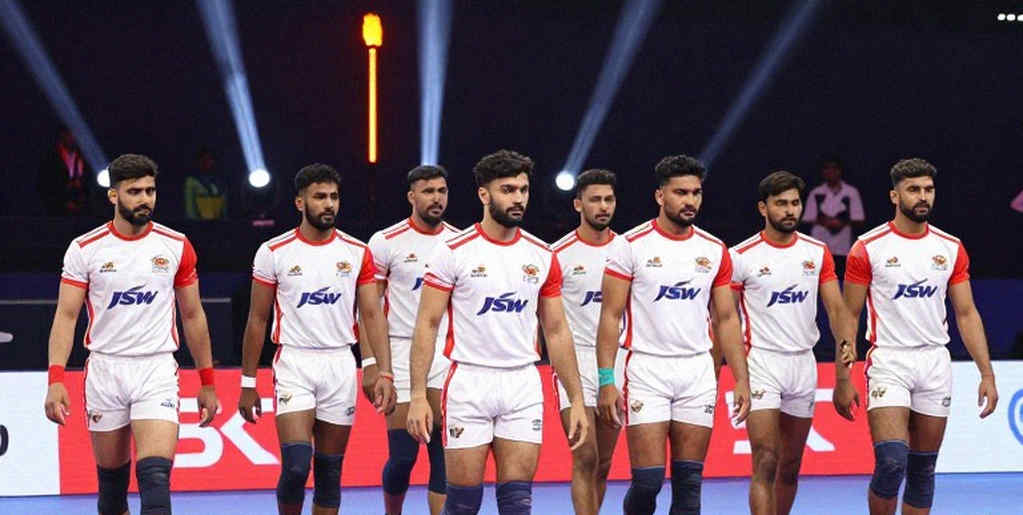
The five matches of day four produced 471 points, an average of 94 per match. In the opener Iran broke Thailand's winning run 83-27. In the second, hosts Japan beat the Republic of Korea 62-35 to sign off with a victory. India then handled Chinese Taipei 37-21. In the evening Nepal won their first match of the event, beating Malaysia 73-52, while Iran beat Pakistan 51-30 and ended Pakistan's medal hopes.
India top Group A with four wins from four. Chinese Taipei are second — a second consecutive kabaddi medal at the Asian Games. Bangladesh finished third, two wins from four, missing the semi-finals by a very narrow score difference. Japan also finished on two wins, in fourth; the hosts played a brand of kabaddi that could make them a top nation in the coming years. The Republic of Korea lost all four.
Iran top Group B with four wins from four, unbeaten like India. Thailand are second with three wins — their first-ever kabaddi medal at the Asian Games. Pakistan finished third and were eliminated, the first time they return from an Asian Games without a kabaddi medal. Nepal are fourth with one win, taken on the final day. Malaysia are bottom without a win.
Iran's 83 was not built on the mat; it was built on the clock
Iran played twice on day four: 83-27 against Thailand, 51-30 against Pakistan. That is 134 points across 80 minutes of live play, a rate of 1.67 points per minute. India's rate the same day was 0.925. Iran's engine ran roughly seventy-one percent faster.
One number deserves isolation: Iran's 83 against Thailand was 25 more than India (37) and Chinese Taipei (21) scored combined on the same day. A single Iranian match outproduced an entire other match's two teams put together.
An 83-27 scoreline means Thailand were repeatedly reduced to one or two defenders on the mat. Each all-out hands the scoring side two bonus points plus full revival of the defending seven. My arithmetic suggests Iran forced at least five all-outs in that match (medium confidence). That is why Thailand could not hold a stable seven-man defensive shape for long stretches — the shape kept fracturing and re-forming, and the gap ran out to 56.
An all-out costs two points; what it really costs is breathing room
We are trained to read an all-out as a two-point event. On the mat it is worth more. After an all-out the defending side does return to seven, but the communication pattern inside those seven is gone — which cover slides into the corner and when, which corner closes the retreat lane, which in covers the centre's gap. All of it has to be re-signalled. The highest-variance raid in kabaddi is often the one immediately after an all-out, because both shapes are raw and the raider can read success fastest on that first attempt.
For Iran the second effect mattered more. An all-out revives the raiding side's own eliminated defenders too. A team scoring two points a minute converts attack into defence, then forces the opponent to make a decision inside 30 seconds against that defence. Iran's 83 against Thailand is not only a raiding record; it is a defensive replenishment record.
India's 37 was a choice, not an accident
India could not score 83 the way Iran did. They did not try. Their rate in that match was 0.925 points per minute, unusually low for the group stage. After several viewings my read is that India leaned on the bonus line and low-risk raids rather than the deep escape lanes, playing in one-point mode instead of chasing all-outs (medium confidence — I do not hold full raid-selection data, only broadcast footage).
That choice wrote Group A's fate. Chinese Taipei could not win the match, but they pinned the margin at 16. Had India played full-throttle the way Iran did, that 16 could have been 40, and Bangladesh would have been in the semi-final. Bangladesh's exit was therefore not the product of a specific failure of their own, but of a tactical decision taken in one match by the strongest team in their group.
Chinese Taipei's cover-shadow, and the limits of borrowing football geometry
Chinese Taipei's defensive setup can be drawn on a chalkboard: two corners anchored at either end of the baulk line, two covers a step behind them, and two ins with a centre inside. When a raider tries to take the outer line at the corner, the cover arrives from behind and shuts the retreat route. At Monaco in 2026, Fabinho and Bakayoko closed the half-spaces on exactly that logic — occupying the opponent's most profitable area first. Kante did the same job at Russia 2026 (5.1 tackles plus interceptions per 90): making the most valuable patch belong to nobody.
The limit has to be stated in the same breath. Kabaddi has no pass, no passing outlet, no ball. In football a cover-shadow occupies space; in kabaddi the same shape occupies time. The raider's only outlet is his own breath and the 30-second clock. Chinese Taipei's defence is not a geometry of space, it is a clock-management engine.
Thailand's first medal is a system medal, not a peak medal
Thailand lost 83-27 to Iran and still reached the semi-finals, because they won their first three matches. A league format forgives a single day's collapse; it does not forgive a lack of consistency. Thailand's medal is not the product of one brilliant afternoon but of holding the same minimum standard across three matches. The counter-example is Pakistan: the 51-30 defeat erased the rest of their arithmetic.
Japan's quiet gym: cant, the referee's ear, and the breath count
Japanese arenas are not like South Asian ones. Spectators sit. There are no drums in the stands, no roar loud enough to defeat a whistle. The rules require the raider to chant "kabaddi" continuously; the moment he stops, it is cant, and cant means out. In a loud arena the raider's voice blends into crowd noise and referees often judge by watching the lips. In a quiet gym every breath is audible from the edge of the mat. Two consequences follow: a raider can no longer buy half a second of silence, and the cost of a long raid rises, because continuous chanting means oxygen debt and a later turn.
In 2026 I looked at empty stadiums through the same lens. That year I counted Bayern's 26 shots and 8 goals in the 8-2 and set it beside the Bundesliga home-win rate falling from 43% to 33% after Project Restart, and argued that removing the crowd changes the decision environment, not merely the atmosphere. In empty stadiums, every echo became a pressing trigger. Japan 2026 is running the same experiment in a different sport (medium confidence — my observation is broadcast-audio based, not matside measurement).
Pakistan's first medal-less Asian Games: tracking a missing shape
Pakistan return without a kabaddi medal for the first time in their Asian Games history. Searching for the cause in one match would be a mistake. My hypothesis runs along a causal chain: the domestic calendar, then club-level coaching continuity, then the national team's defensive vocabulary. The more the domestic system contracts, the smaller the national side's defensive repertoire, and the less capacity it has to change shape in a big match. (Low confidence — I have not verified Pakistan's domestic footage; treat this as a testable hypothesis.)
Medals are already secured, so the group stage was the real tournament
All four semi-finalists already hold a medal. Losing in the last four ends nothing except the gold chase. That structure turns the semi-finals into something closer to a test event: more rotation, more experimentation, less tactical risk. The most pressured decisions in Asian Games 2026 kabaddi were taken on the last two days of the group stage, not on the September 26 stage.
The counter-intuitive read: the praise will land in the wrong place
The tone after the group stage is already fixed: Chinese Taipei's fighting spirit, Bangladesh's bad luck, Japan's rise. The arithmetic sits elsewhere. Chinese Taipei's qualification was partly a mathematical event, produced by the strongest team in their group choosing not to chase all-outs in that one match. Nobody will re-watch India versus Chinese Taipei, because the result looks routine. That match is exactly the one that decided who plays a semi-final.
The second blind spot belongs to the system itself. In kabaddi, score difference is largely manufactured by all-out cascades. A 20-point cascade cannot be recovered with bonus points. The format therefore teaches teams to avoid collapse rather than to chase wins, especially in the last ten minutes. Chinese Taipei did precisely that, and it delivered them a medal. Read the system instead of praising the grit and the group stage becomes a reward structure for minimum-risk kabaddi.
Forward look
If the September 26 gold medal match is India against Iran, the number I will watch is not the score but raids per minute. Iran's group-stage tempo was 1.67 points per minute; India's was 0.925. If the final runs at India's tempo, Iran's all-out cycle stalls. If it runs at Iran's tempo, India's one-point-mode arithmetic breaks. The second variable is arena acoustics: in a quiet crowd, does the raider who holds the longest chant win, or the defender who reads the lips? The final will answer that question, not the points table.